
 EN
EN DE
DE IT
IT FR
FR ES
ES RU
RU JP
JP RO
RO
Mozart, Requiem
Order tickets
November 2026 | ||||||
|---|---|---|---|---|---|---|
Mo | Tu | We | Th | Fr | Sa | Su |
An unfinished masterpiece, a musical testament, a timeless sacred composition transcending the liturgical framework, Mozart's Requiem is a collection of superlatives. At his death on December 5, 1791, the composer had fully completed the Introit and the Kyrie , and largely defined the content of the following five parts, from the Dies Irae to the Confutatis .
The work has since given rise to countless hypotheses, numerous versions of the unfinished pages, and above all, splendid interpretations: it captivates both listener and performer, and ultimately prevails almost entirely in the form left by Mozart. As if these last notes, penned by a dying composer, were all the more precious…
Royal Opera Productions.
Program and cast
Marie Zaccarini* Soprano
Camille-Taos Arbouz* Mezzo-soprano
Antoine Ageorges* Tenor
Alexandre Adra* Baritone
* Members of the Royal Opera Academy – class 2025/2027
Chorus of the Royal Opera
Orchestra of the Royal Opera
Théotime Langlois of Swarte Direction
Program
Wolfgang Amadeus Mozart (1756-1791)
Night Serenade K. 239
Walk
Minuet
III. Rondo
Requiem
I – Introitus : “Requiem”
II – Kyrie
III – Sequence
1 – Dies irae
2 – Tuba mirum
3 – Rex tremendae
4 – Recordare
5 – Confutatis
6 – Lacrimosa
IV – Offertorium
1 – Domine Jesu
2 – Hostias
V – Sanctus
VI – Benedictus
VII – Agnus Dei
VIII – Communio : “Lux aeterna”
Royal Chapel of Versailles
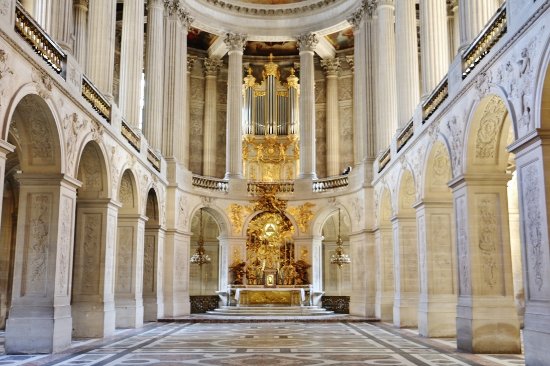
The Royal Chapel was finished in 1710 at the end of Louis XIV’s reign. Jules Hardouin-Mansart proposed the plan to the King in 1669. The First Architect died in 1708 without seeing the end of the works which were taken over by his brother-in-law Robert De Cotte. The reigning monarch only came for major religious festivals where he received communion, for ceremonies of the Order of Saint-Esprit, for the baptisms and weddings of the royal children celebrated from 1710 to 1789. This exceptional palatine chapel was also used for a wide range of religious ceremonies, including the marriage of Archduchess Marie-Antoinette with the future Louis XVI.
Above the altar, around the organ by Clicquot decorated with a fine relief of King David, played by great masters like François Couperin, the Chapel’s music, famous all over Europe, sung motets everyday during all religious services. Today Handel’s Dixit Dominus or Messiah, Bach’s Oratorios, Magnificat, Cantatas or Passions, Pergolesi’s Stabat Mater or Charpentier’s Te Deum ring out in this majestic architecture.
Related events