
 EN
EN DE
DE IT
IT FR
FR ES
ES RU
RU JP
JP RO
RO
© Elisa Haberer / OnP
Hamlet | Opera
Order tickets
 September 2027 September 2027 | ||||||
|---|---|---|---|---|---|---|
Mo | Tu | We | Th | Fr | Sa | Su |
The Premium Category offers an exclusive experience, including:
The best available seats within the Optima Category
A contribution in support of the Opera
A program of the event
A glass of champagne
First part
Act 1:
Hamlet is disgusted to see his mother, a mere two months after his father’s death, marry his brother. Mourning is followed by wedding and coronation celebrations. Despite the human fickleness that surrounds him, Hamlet tells Ophelia that she can doubt everything but his love. Hamlet learns from Horatio and Marcellus that they have seen his father’s Spectre. On the Esplanade where Hamlet has followed his friends, the Spectre appears to him and reveals that he was betrayed by Gertrude, his wife, and murdered by his brother, the new King. The Spectre calls upon his son to avenge him.
Act 2:
Ophelia complains of Hamlet’s cold and distant attitude. The Queen, distressed by her son’s attitude, hopes that Ophelia will be able to bring him reason and peace. The King and the Queen seek to reassure themselves: Hamlet suspects nothing. Hamlet refuses to call the King “father” when the latter suggests it. Upon hearing of their arrival, Hamlet informs the King and Queen that actors will entertain them during the evening. Hamlet asks the actors to perform the tragedy of King Gonzago and Queen Genever. The murder of the King that the play portrays should make his father-in-law and his mother react. This is what happens. Hamlet then calls for revenge and the death of the culprit. In a state of delirium, Hamlet falls into the arms of Marcellus and Horatio while the whole court remains distraught.
Second part
Act 3:
Hamlet is alone. “To be or not to be... oh mystery... to die... to sleep... perchance to dream”: such is Hamlet’s entry into metaphysics. He discovers that the King is not far from him. He hesitates to kill him when he discovers him kneeling in prayer, since repentance, he thinks, might save his soul. Polonius, Ophelia’s father, is talking to the King. Hamlet deduces that he was an accomplice in his father’s death. He then declares to Ophelia that she must lock herself away in a convent. He no longer believes in anything, not even in love. His soul is like marble, he declares to her. Ophelia is desperate. The Queen tries to reason with her son. But his violence and his rejection frighten her. Hamlet tells her that he knows everything and that he will take revenge. The Spectre appears to remind Hamlet to leave the Queen to the judgment of Heaven and to go after the murderous King.
Act 4:
Alone, Ophelia, who calls herself “Hamlet’s wife”, plunges into madness, sinks into the water of a river and dies.
Act 5:
Hamlet speaks with two gravediggers who have forgotten the name of the person for whom the grave they are digging is intended. Hamlet mourns Ophelia without knowing that she is dead. Laertes, in despair over his sister’s death, reveals Ophelia’s demise to Hamlet. When the funeral procession arrives, Hamlet wants to commit suicide. Horatio and Marcellus prevent him from doing so. The Spectre appears. This time, in full view of everyone, Hamlet kills the King, “my father’s murderer”. “Live for your people, it is God that makes you King”, declares the Spectre to his son.
CHARACTERS
Hamlet: Prince of Denmark, son of Gertrude
Ophelia: Daughter of Polonius engaged to Hamlet
Gertrud: Queen of Denmark and wife of Claudius
Claudius: King of Denmark and uncle of Hamlet
Laërte: Ophelia’s brother
The King’s Spectre: Ghost of Hamlet’s father
Horatio and Marcellus: Friends of Hamlet
Polonius: Lord Chamberlain
Program and cast
Opera in five acts (1868)
After William Shakespeare
Language : French
Surtitle : French / English
Duration : 3h40 with 1 interval
First part: 130 min
Intermission: 40 min
Second part: 50 min
Creative team
Ambroise Thomas: Music(1811 - 1896)
Jules Barbier: Libretto
Michel Carré: Libretto
Michael Schønwandt: Conductor
Ching-Lien Wu: Chorus master
Krzysztof Warlikowski: Director
Małgorzata Szczęśniak: Set design and costume design
Felice Ross: Lighting design
Denis Guéguin: Video
Claude Bardouil: Choreography
Sophie Laplane: Choreography
Christian Longchamp: Dramaturgy
Cast
John Osborn: Hamlet
Adela Zaharia: Ophélie
Clémentine Margaine: Gertrude
Jean Teitgen: Claudius
Julien Henric: Laërte
Laurent Naouri: Spectre du roi défunt
Manase Latu: Marcellus
Vartan Gabrielian: Horatio
André Heyboer: Polonius
Morgan-Andrew King: Premier fossoyeur
Bergsvein Toverud: Deuxième fossoyeur
Orchestre et Chœurs de l’Opéra national de Paris
Photo gallery

© Elisa Haberer / OnP

© Elisa Haberer / OnP
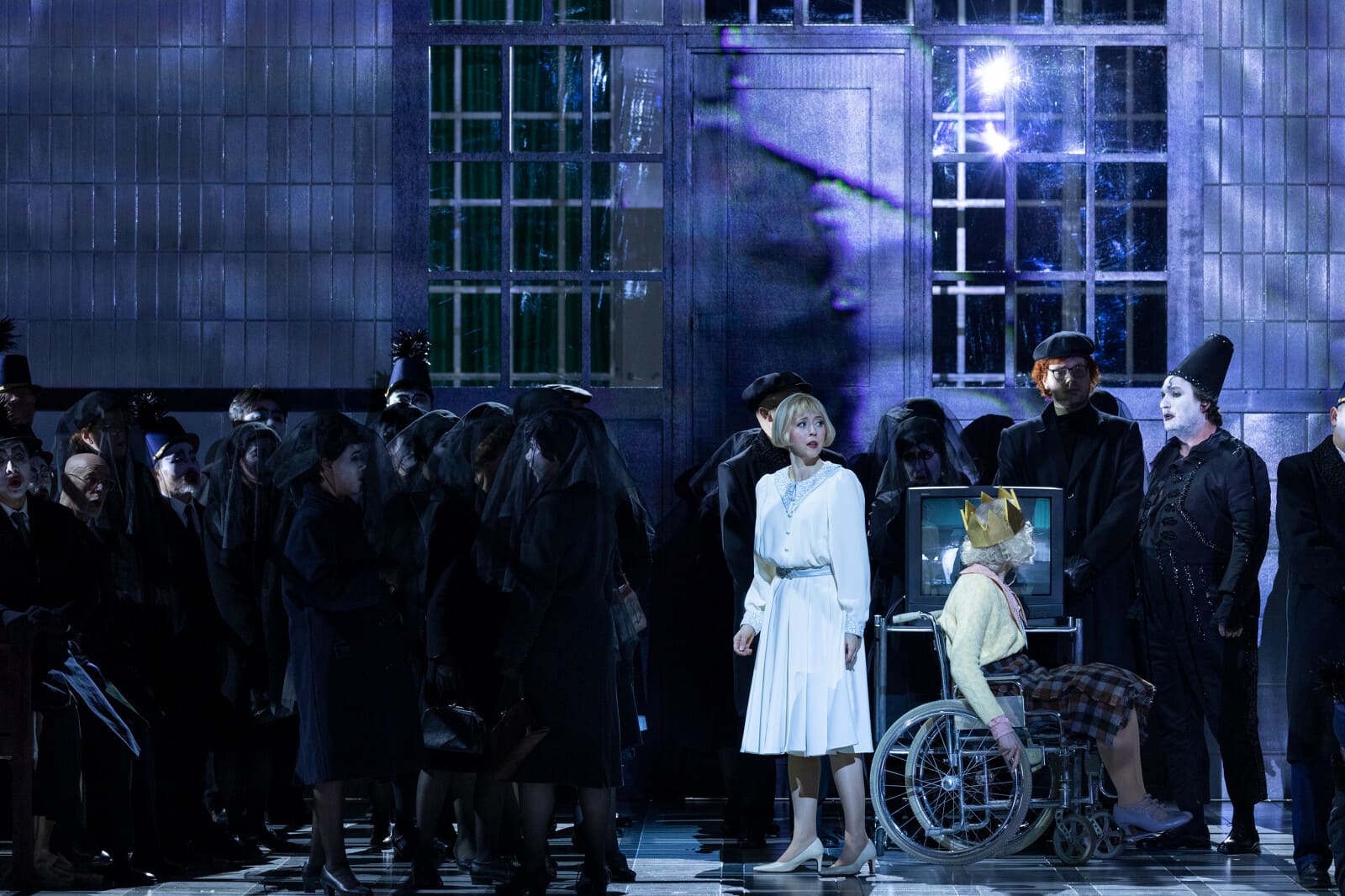
© Elisa Haberer / OnP

© Elisa Haberer / OnP
Paris Opera Bastille
RM Europa Ticket GmbH is an officially accredited ticket reseller of/by Opera National de Paris.
Agency number: 4848428
Opéra Bastille
A great modern theatre
The Opéra Bastille is the work of the Canadian-Uruguayan architect Carlos Ott, who was chosen in November 1983 after an international competition that attracted entries from some 1,700 architects. The theatre was inaugurated on July 13th 1989.
Its architecture is marked by transparent façades and by the use of identical materials for both the interiors and the exteriors.
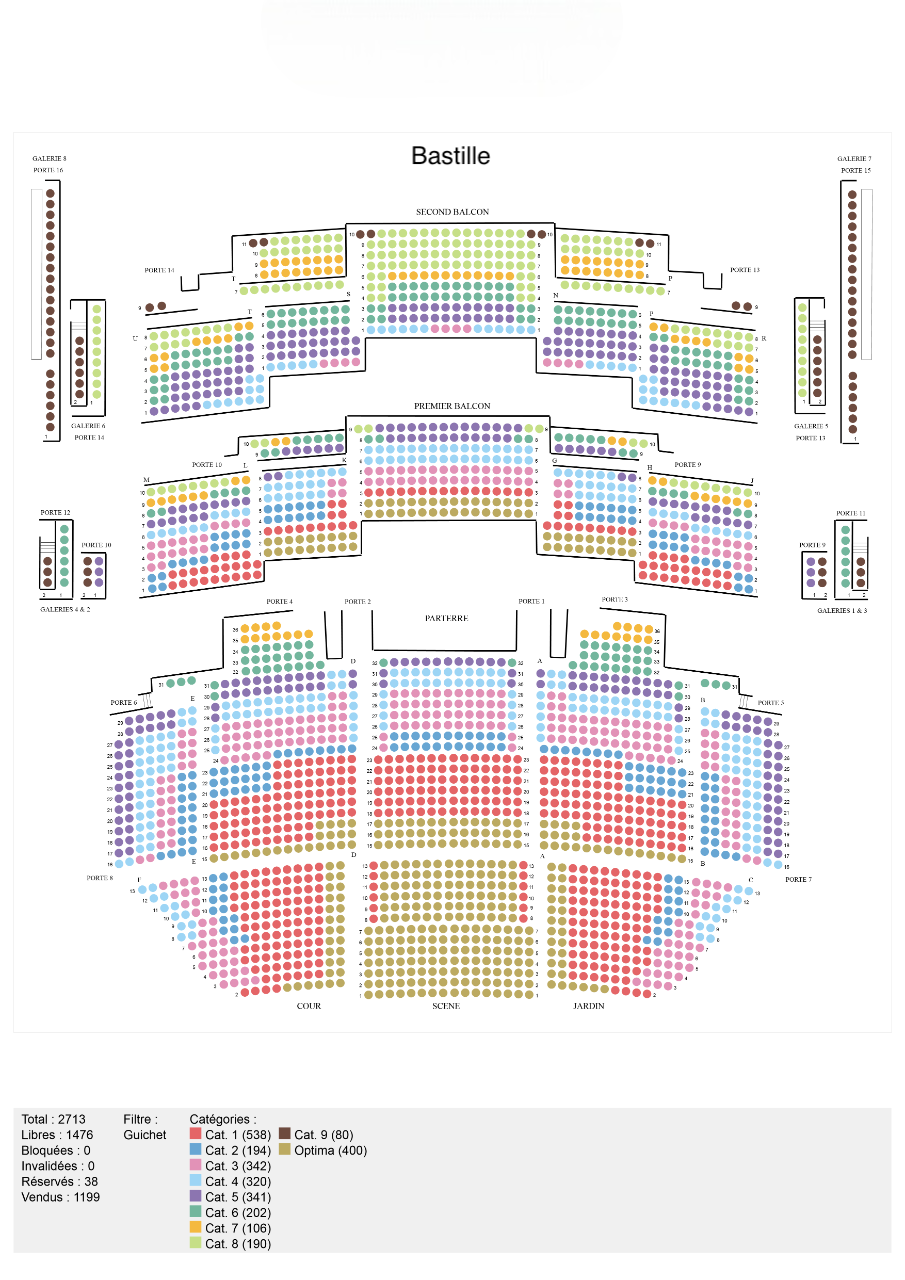
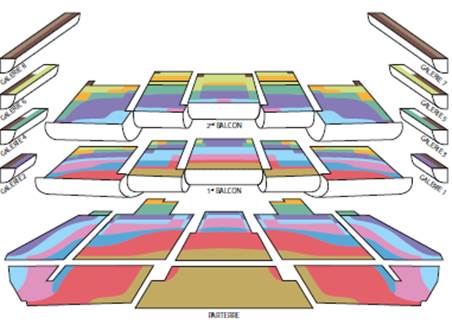
With its 2,700 acoustically consistent seats, its unique stage facilities, its integrated scenery, costume and accessory workshops, as well as its numerous work areas and rehearsal rooms, the Opera Bastille is a great modern theatre.
Stage facilities
Orchestra pit, mobile and adjustable, can be covered; at its largest it can house 130 musicians
Main stage, 45 m high, 30 m wide, 25 m deep, made up of 9 elevators allowing several levels to be created and supported by three main elevators, which bring scenery up from below stage
Clearing zones, 4 storage areas with the same dimensions as the stage
Backstage area, with its scenery turntable
Circulation area, scenery temporarily stored between the stage, workshops and rehearsal stage
Rehearsal stage, the Salle Gounod, with its orchestra pit and dimensions identical to those of the main stage
The building
Area at ground level: 22,000 m²
Floor area: 160,000 m²
Total height: 80 m (including 30 m below street level)
The auditoriums
The main auditorium
Area: 1,200 m², 5% of the total for the building
Dimensions: 20 m high, 32 m deep, 40 m wide
Number of seats: 2,703
Materials: blue granite from Lannelin in Brittany, pearwood from China, glass ceiling
The amphitheatre
Area: 700 m²
Depth : 21.4 m
Number of seats : 450
Materials: white breccia marble from Verona, staff ceiling
The Studio
Area: 280 m²
Depth: 19,5 m
Number of seats: 237
Materials: white breccia marble from Verona and pearwood

Related events