
 EN
EN DE
DE IT
IT FR
FR ES
ES RU
RU JP
JP RO
RO
Fauré, Requiem
Order tickets
 July 2037 July 2037 | ||||||
|---|---|---|---|---|---|---|
Mo | Tu | We | Th | Fr | Sa | Su |
Among the sacred works that have become staples of the repertoire, Fauré's Requiem occupies a unique place. Far removed from the operatic or thunderous requiems of Mozart, Berlioz, Brahms, or Verdi, this is an intimate score, composed with modest means, yet possessing a distinctly French charm. Fauré clearly did not wish to outdo his illustrious predecessors, but rather to reflect his own era, when Parisian piety sought to be accessible to the faithful, and he undoubtedly aligns himself more closely with the recent requiems of Liszt and Saint-Saëns.
Created at the Madeleine church in 1888 for an architect's New Year's Eve celebration, this work, which (falsely) presents a confessional tone, quickly achieved considerable success in concert. "My Requiem ," he said, "has been said not to express the terror of death; someone called it a lullaby of death. But that is how I feel about death: as a happy deliverance, an aspiration to the happiness of the afterlife, rather than as a painful passage."
In this centenary year of Gabriel Fauré's death, it is only fitting to perform his most emblematic sacred work: the Requiem he composed at La Madeleine Church for the centenary of the execution of Louis XVI on January 21, 1893. Numerous performances followed worldwide, often in expanded versions for concert halls. Victor Jacob has chosen to perform the "church" version of this deeply inspired Requiem with chamber orchestra (without violins but with violas!), using the 1893 arrangement. He complements the program with sacred works by Rossini, Schubert, and Brahms, wonderfully showcasing the choristers, whom Fauré, as choirmaster of La Madeleine, particularly cherished. The Chorus and Orchestra of the Royal Opera of the Palace of Versailles provide a sublime setting for this collection of masterpieces…
Royal Opera Productions.
Program and cast
Isaure Brunner, Alexandre Adra*
Member of the Royal Opera Academy – Class of 2025/2027
Choir and Orchestra of the Royal Opera
Victor Jacob, Conductor
Royal Chapel of Versailles
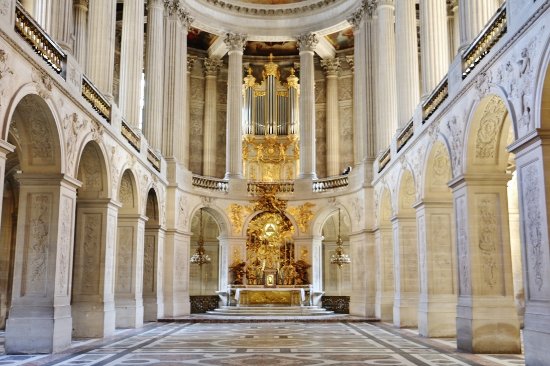
The Royal Chapel was finished in 1710 at the end of Louis XIV’s reign. Jules Hardouin-Mansart proposed the plan to the King in 1669. The First Architect died in 1708 without seeing the end of the works which were taken over by his brother-in-law Robert De Cotte. The reigning monarch only came for major religious festivals where he received communion, for ceremonies of the Order of Saint-Esprit, for the baptisms and weddings of the royal children celebrated from 1710 to 1789. This exceptional palatine chapel was also used for a wide range of religious ceremonies, including the marriage of Archduchess Marie-Antoinette with the future Louis XVI.
Above the altar, around the organ by Clicquot decorated with a fine relief of King David, played by great masters like François Couperin, the Chapel’s music, famous all over Europe, sung motets everyday during all religious services. Today Handel’s Dixit Dominus or Messiah, Bach’s Oratorios, Magnificat, Cantatas or Passions, Pergolesi’s Stabat Mater or Charpentier’s Te Deum ring out in this majestic architecture.
Related events